
It’s the first week with a new set of aligners: they feel tight, your coffee is going cold on the desk, and you’re wondering how anyone keeps these in all day. Aligners fit into daily life as long as they stay in for most of it, at least 22 hours a day, and a few habits make that much easier. Here’s what day-to-day life in Invisalign involves, from meals and cleaning to soreness, speech, and what to do if an aligner goes missing.
Table of Contents
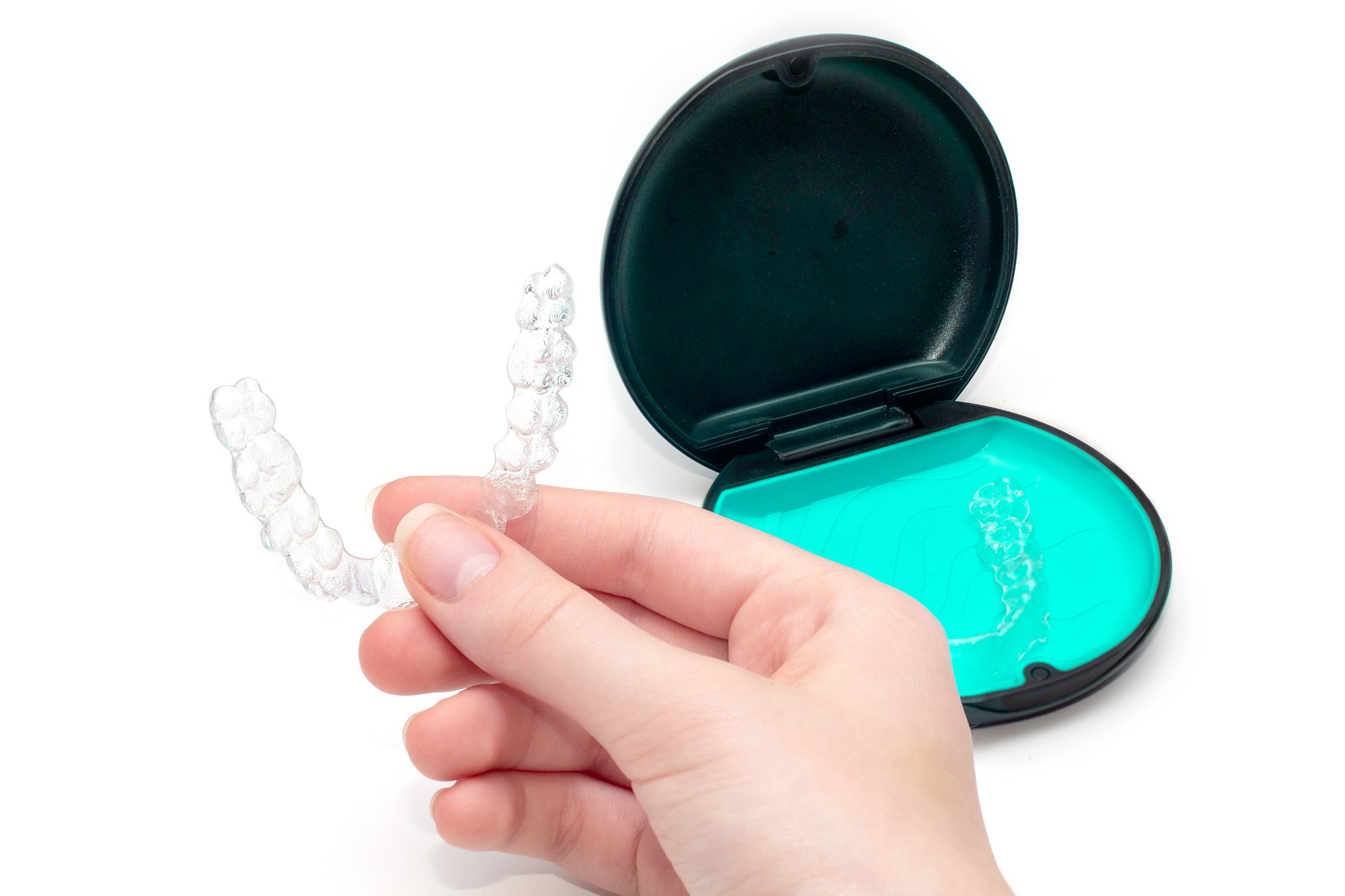
How Many Hours a Day to Wear Aligners
Aligners are typically worn at least 22 hours a day, or as your orthodontist prescribes, because they can only move teeth while they’re in your mouth.
They come out for meals, for brushing and flossing, and for short periods for work or social occasions, and each set is worn in the order your orthodontist gives you. Inconsistent wear can slow your progress, making treatment take longer or compromising the result.
| Moment | What to do |
|---|---|
| Breakfast or a meal | Take the aligners out, put them in their case, eat, then brush before they go back in |
| A coffee or a snack | Take them out first; only plain water goes in with aligners |
| Eating away from home | Carry the case and a travel toothbrush, toothpaste, and floss |
| A workout or a game | Take them out for sports drinks; for contact sports, take them out and wear a mouthguard |
| Bedtime | Brush for two minutes and clean between your teeth, then put them back in |
Eating and Drinking With Aligners
Take your aligners out whenever you eat or drink anything other than plain water. Because they come out for meals, no food is off-limits.
Plain water is the only drink the American Association of Orthodontists (AAO) says to have with aligners in. Other liquids seep into the aligners and are held against your teeth, and if a drink contains sugar or acid, that can quickly lead to staining and decay. So a coffee means taking your aligners out first, the same as a soft drink, flavored water, or sports drink.
If you’re working out, don’t sip sugary or acidic sports drinks with aligners in. Take them out, drink, rinse with water, and put them back.
Brushing Before Aligners Go Back In
Brush thoroughly before your aligners go back in, because teeth need to be spotless when the trays cover them.
Aligners can trap liquid and food particles against your teeth, which raises the risk of cavities and gum disease, and they can lead to white spots on the enamel when teeth aren’t brushed after eating or trays aren’t cleaned well. Because aligners come out, brushing and flossing are easier than with fixed braces, but only if you do it before they go back in.
- Brush for two minutes after meals and snacks, and before bed, with fluoride toothpaste.
- Clean between your teeth at least once a day.
- Angle the brush toward the gumline and around any attachments.
- Carry a travel toothbrush, toothpaste, and floss for meals away from home.
- Keep seeing your dentist for cleanings and checkups during treatment, at least every six months or as recommended.
Looking After Your Aligners
Clean your aligners the way your orthodontist shows you, and put them straight into their case every time they come out.
Aligners are designed to be taken out and cleaned regularly, and worn for long stretches without cleaning, they can hold bacteria and food particles. They’re also easy to lose: they fall out of pockets and purses and get thrown away wrapped in napkins. So don’t put them in a napkin, pocket, or purse, and keep them away from pets.
Questions about wearing aligners? Call our Everett dental office to talk it through.
Soreness and Pressure With a New Set
Some pressure or soreness is normal when you start aligners or switch to a new set. At the start of treatment, it usually eases within about a week.
Patients in one study described it as dull or pressure-like. In studies it tended to peak in the first 24 hours after treatment started and ease by the end of the first week, and the AAO describes an adjustment period of about a week at the start. A systematic review found Invisalign patients reported less pain than patients with fixed braces in the first few days of treatment, with no difference found after that, over up to three months.
Taking aligners out because they feel uncomfortable defeats their purpose. If discomfort is unusual or doesn’t settle, let your orthodontist know.
Talking With Aligners
Speech often changes a little when you start aligners, sometimes with a slight lisp, and it usually settles within a week or two.
A review of studies found speech changes are likely at first, especially with sounds like s, z, sh, and th, but patients adapt quickly: most recovered within 7 to 14 days, and a few took 30 to 60 days. For orthodontic appliances in general, the AAO suggests speaking slowly and reading aloud to adjust faster.
Attachments: The Small Bumps on Your Teeth
Attachments are small, tooth-colored bumps placed on some teeth to help the aligners guide those teeth into place.
They’re usually placed at the appointment when you receive your aligners. A systematic review found attachments mostly make aligner treatment more effective for certain movements, such as rotating a tooth, although some results were mixed. The AAO advises brushing carefully around them.
Everett, WA
Thinking about Invisalign?
Our orthodontist, Dr. Sohrabi, can check whether aligners suit your teeth.
New Sets, Check-Ups, and Lost Aligners
Each set is usually worn for one to two weeks, on the schedule your orthodontist sets, with regular check-ups to make sure your teeth are moving as planned.
The AAO says visits to pick up new aligners are typically about every 6 to 10 weeks and are short. Moving teeth is a complex process that needs an orthodontist’s supervision from start to finish.
If an aligner is lost or broken
Let the office treating you know right away. Don’t keep wearing an aligner that’s sharp, painful, or badly distorted. Your orthodontist will tell you whether to go back to your previous aligner for a while, and whether the loss will extend your treatment time.
Sports and Mouthguards
For contact sports, take your aligners out and wear a mouthguard.
A blow to the mouth can crack an aligner, which can delay treatment, and the American Dental Association advises against wearing a removable appliance during contact sports. Ask your orthodontist which type of mouthguard to wear during treatment.
Invisalign at Icon Dental Center
Aligners aren’t right for everyone. They may not work as predictably for severe bite problems, and the orthodontist recommends aligners, braces, or a combination, depending on your teeth. The AAO also warns that mail-order aligners often skip an in-person exam and supervision.
Icon Dental Center is an Invisalign provider with an iTero scanner, and our orthodontist, Dr. Keyvan Sohrabi, does all orthodontic treatment. Our Invisalign page explains what treatment involves at our Everett office.
Common Questions About Wearing Invisalign
Can I take my aligners out for a special occasion?
For short periods, yes. The AAO says aligners can come out for work or social occasions, but they still need to be worn at least 22 hours a day, so put them back as soon as you can.
Will aligners affect my sleep?
Some people find their sleep disturbed when they first start aligners, and in one study this improved within the first week of treatment.
Do I need a retainer after Invisalign?
Yes. Everyone needs retainers after orthodontic treatment, whichever appliance moved their teeth.