
Spot It Early, Fix It Simply - Orthodontics for Children in Everett, WA
Most children don’t need braces at seven. But that’s the age problems become visible, and catching a bite issue early often means simpler treatment later, or none at all. Assessed by a board-certified orthodontist in the same practice as your family dentist. Trusted by Everett families with 330+ reviews, 4.9 stars on Google.
4.9 Stars on Google
Family-Friendly Office
Five Plans In Network
Modern & Comfortable Facility
Call ahead and we’ll find a time that works for you.

Signs to Look For
What a Bite Problem Looks Like
Most parents notice something before a dentist mentions it. The common signs:
- Teeth that overlap or look too crowded to fit
- A gap between the front teeth when the back teeth are closed
- Upper teeth that sit noticeably in front of the lower ones
- Lower teeth in front of the upper ones when biting down
- Teeth that don’t meet on one side
- Difficulty chewing, or biting the inside of the cheek
- Thumb sucking continuing past about age four
- Losing baby teeth very early or very late
What It Means
Some Correct Themselves
Some of these correct themselves. Some are simpler to treat now than at fourteen. That’s what an evaluation tells you.
Your Orthodontist
Assessed by a Specialist
Dr. Keyvan Sohrabi is board certified, trained at the University of Washington with advanced degrees from Harvard and McGill. He assesses your child in the same practice as your family dentist.
When to Start
Why Age Seven?
The American Association of Orthodontists recommends a first orthodontic evaluation by age seven.
Not because that’s when treatment starts, but because it’s when a dentist can see how the adult teeth are coming through and how the jaw is developing. Most children who are evaluated at seven don’t need anything done yet. They get checked again in a year or two.
What early evaluation catches:
- Crowding that will get worse as adult teeth arrive
- A jaw growing in a way that will cause bite problems
- Teeth that are stuck and not coming through
- Habits like thumb sucking that are affecting tooth position
Where something does need doing early, it’s usually simpler than waiting. Guiding a growing jaw is easier than correcting a finished one.
Two Phases
Does My Child Need Braces Now?
Usually not. Most children who need orthodontics get it in their early teens, once the adult teeth are through.
Early treatment, sometimes called Phase 1, is for a smaller group. It’s used when waiting would make the eventual treatment harder or a problem permanent. Making room for crowded adult teeth, correcting a crossbite that’s affecting jaw growth, or dealing with a habit that’s moving teeth.
If your child needs it, we’ll explain exactly what it achieves and what it doesn’t. If they don’t, we’ll tell you that too and see them again in a year. We don’t put braces on children who don’t need them.

If Treatment Is Needed
What Treatment Looks Like
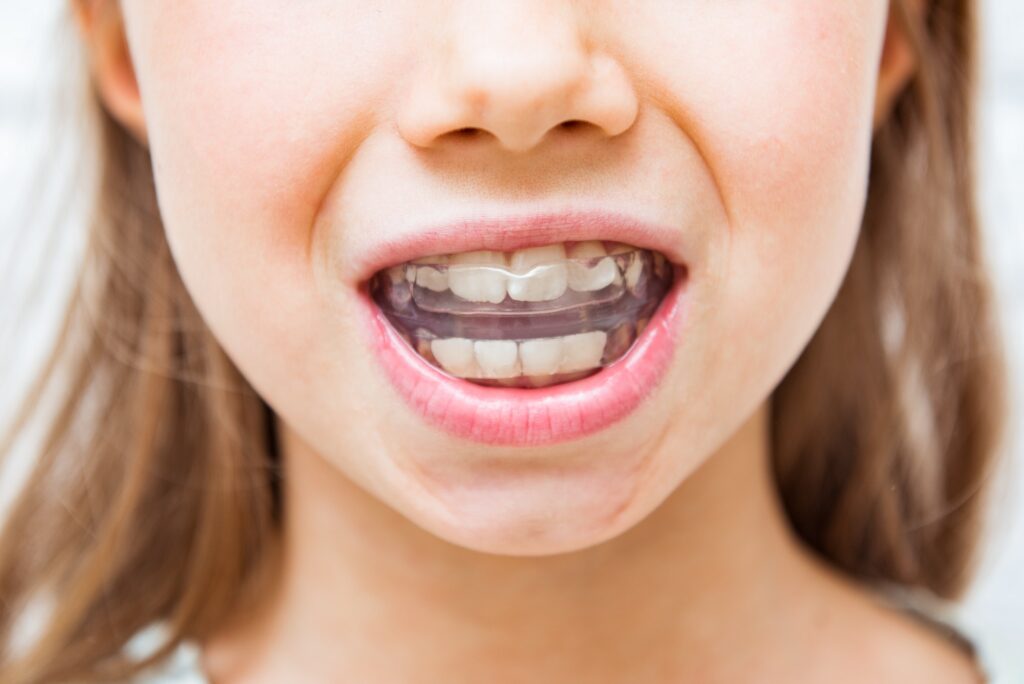
- Space maintainers hold room for adult teeth after a baby tooth is lost early
- Expanders widen a narrow upper jaw, most effective while it’s still growing
- Partial braces correct specific teeth without treating the whole mouth
- Habit appliances help stop thumb sucking or tongue thrusting
- Full braces, usually in the early teens once adult teeth are through
Cost & Payment
What Does Treatment Cost?
An evaluation tells you what, if anything, is needed. If it’s nothing, that’s the whole answer.
Where treatment is needed, cost depends on what’s involved. Early treatment is usually less than full braces, though a child may need both phases eventually. We’ll set out what’s likely at the evaluation.
Will Insurance Cover It?
Many dental plans include orthodontic coverage for children, often with a lifetime maximum rather than an annual one. We’ll check yours before you commit.



Please note: We do not accept DSHS, Apple Care, Apple Health, or Provider One dental insurance plans.
Paying the Balance
We offer financing through CareCredit.
Not sure if anything needs doing?
Book an evaluation. Dr. Sohrabi will tell you what he sees, and if the answer is that nothing needs doing yet, that is what you will hear.
Your Orthodontist
Who Plans Your Treatment
All orthodontic treatment here is planned and delivered by our board-certified orthodontist, in the same practice as your general dentist.

Orthodontist
Orthodontic training at the University of Washington, with advanced degrees from Harvard and McGill. Board certified, and published in the American Journal of Orthodontics.
Want to meet the team in person?
Visit our Everett dental office – we love meeting new patients and
families. You can also meet our support team, the people who will greet you at the door and help with scheduling and insurance.
testimonials
What Patients Say About Icon Dental Center
Our patients say it best. Icon Dental Center has more than 330 Google reviews at a 4.9 average. Here’s what your neighbors are saying:
EXCELLENT Based on 333 reviews
 Posted on Google
 Phil WolffThe prep work was outstanding, the cleaning qas done by the boss. Very fast.Posted on Google
 DanaHad a great cleaning experience yesterday. I love that my Dentist does the cleaning and exam.Posted on Google
 Cindy WrightMy office visit for a filling was great! I want to especially say Thank You to the dental assistant assisting the dentist during my visit. I enjoyed her comforting demeanor and stories that reduced my visit anxiety regarding the procedure. C.W.Posted on Google
 Bri FietkauAbsolutely hands down the best dentist I’ve been to very quick and thorough! The assistant was absolutely amazing! As the dentist was giving my numbing shot she was right next to me the whole time rubbing my arm to comfort me! It honestly made the experience that much better! The dentist talked through step by step what she was doing in my mouth and what I’d feel so there was no surprises! Absolutely so grateful I’ve encountered such an amazing team!Posted on Google
 Donna DayGoing to the dentist is not my favorite thing to do, but the hygienist and the dentist made the experience go well with their professional and friendly attitudes.Posted on Google
 Allan CampbellGreat appointment very professional job well done Dr Valentine and staff are the very bestPosted on Google
 colleen earleyI had a “ reflux “ attack and they were so kind and patient with me. They always are so kind to me.Posted on Google
 mariluna BrizuelaA very clean and organized place; the staff is very professional and friendly—I love it.Posted on Google
 Aristo PandaSo gentle thank you
New Patient Forms
Save Time at Your First Visit
Download and complete your new patient forms before your visit, so there’s less to fill in when you arrive. Bring them with you, or email them ahead.
Location
Visit Our Everett Dental Office
Ready to Book Your Appointment? Whether you’re due for a routine checkup or considering cosmetic treatment, our friendly team in Everett is here to help.
Icon Dental Center – Everett
Address:
1820 100th Pl SE Suite B, Everett, WA 98208, United States
Phone:
(425) 337-2400
Hours:
Mon, Tues, Thu: 8:00 AM – 5:00 PM
Wed 8:00 AM - 4:00 PM
Sat, Sun & Fri: Closed
Faq's
Frequently Asked Questions
By age seven, per the American Association of Orthodontists. Most children evaluated at that age don’t need treatment yet, but it’s when problems become visible.
Most children with a bite issue do eventually, usually in their early teens. A smaller number benefit from earlier treatment. An evaluation tells you which applies.
Early treatment while a child still has some baby teeth, used when waiting would make the eventual result harder. It doesn’t replace braces later, it makes them more straightforward.
Sometimes. Early treatment addresses a specific problem; full braces later align everything once the adult teeth are through. We’ll be clear about that at the start rather than after the first phase.
After about age four it can start moving teeth and affecting how the jaw develops. Worth mentioning at the evaluation.
Many plans include orthodontic coverage for children, usually as a lifetime maximum. We’ll check your specific plan.
Last updated: September 2026