
Broken Bracket, Poking Wire, Loose Band - Orthodontic Emergencies in Everett, WA
If you are in braces or aligners with us and something breaks, comes loose or starts digging into your cheek, call the office. Most of these problems are uncomfortable rather than dangerous, and most are settled in one short visit. Below is what to do in the meantime, and how quickly each one actually needs looking at.
4.9 Stars on Google
Family-Friendly Office
Five Plans In Network
Modern & Comfortable Facility
Call or message during business hours and we will get back to you.
Not in treatment with us? See “Who This Page Is For” below.
Scope
Who This Page Is For
This page covers orthodontic problems (brackets, wires, bands and aligners) for patients currently in treatment with us.
If you have knocked out a tooth, have facial swelling, or are in severe pain, that needs urgent dental care rather than an orthodontic appointment. Contact an emergency dental provider or your nearest urgent care.
The Short List
What Counts as an Orthodontic Emergency
Almost everything that goes wrong with braces or aligners falls into one of five categories. None of them is dangerous. All of them are worth a phone call, because a bracket or wire that is not doing its job means treatment quietly stops making progress.
- A bracket has broken off the tooth, or is sliding along the wire
- A wire has slipped out of place and is poking your cheek, lip or tongue
- A band around a back tooth has come loose
- A ligature, the small rubber ring or wire tie, has come off
- An aligner no longer seats properly, or one has been lost
Everything else is either normal soreness or a dental problem rather than an orthodontic one.
Most Common
A Broken Bracket
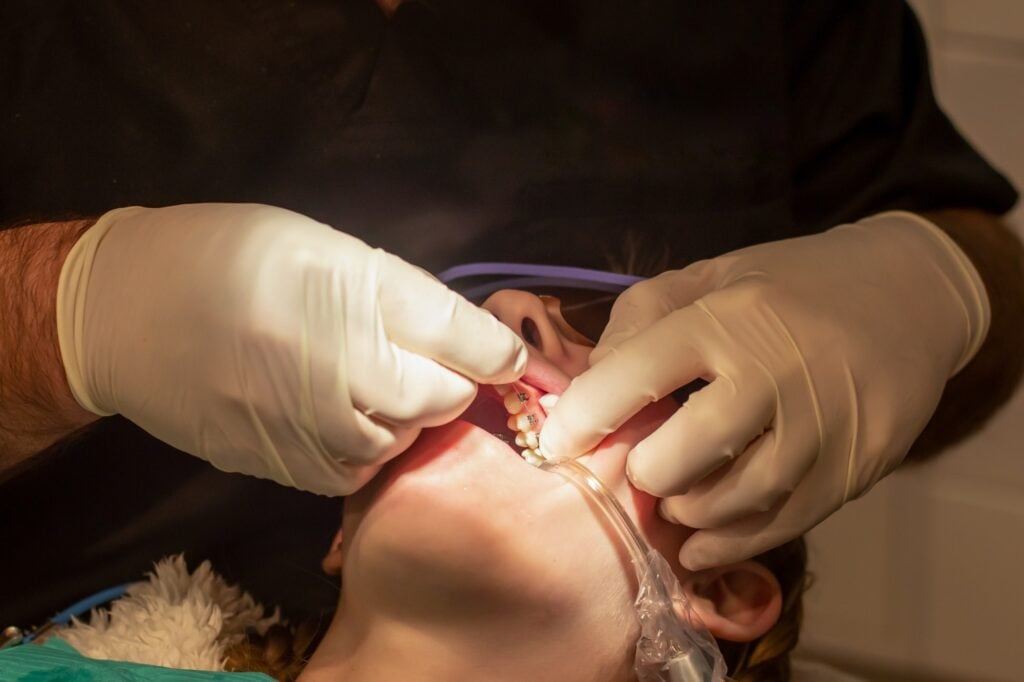
Brackets come off. It is the single most common thing that happens in braces, and it is almost always food: something hard, something sticky, or a bite straight into a whole apple. Occasionally a knock during sport does it.
You will usually notice a bracket that has come away from the tooth but is still held on by the wire, sliding when you touch it. Sometimes it comes off completely.
What to do. If the bracket is still on the wire, leave it there. Slide it back to roughly the right position if it has moved, and cover it with orthodontic wax if it is rubbing. If it has come off entirely, keep it and bring it with you. Do not try to glue it back on.
Why it needs booking. A loose bracket is not moving the tooth it is attached to. Leave it for a few weeks and that tooth stops progressing while the rest keep going, which usually means adding time at the end. Call the office and we will book you in to have it rebonded.
Also Common
A Loose Bracket or Band
A bracket that is loose but has not come off feels slightly wrong rather than obviously broken. Run your tongue along it and it moves. A band, the metal ring cemented around a back molar, comes loose the same way, usually after something chewy.
Neither needs to be seen today. Both do need to be seen, because they have stopped working. The cement seal has gone, which also means food and plaque can sit underneath against the enamel.
What to do. Eat soft food on that side, keep the area clean, and use wax if anything is catching. Call the office and tell us which tooth it is, so we know how much time to set aside. If a band has come off completely, keep it. It may go straight back on.
The Uncomfortable One
A Wire Poking Your Cheek
Wires shift. As teeth move, the archwire can slide to one side and leave an end sticking out behind the back molar, right where it catches the cheek. It is one of the more genuinely painful things that happens in braces, and it can rub a sore spot within a day.
What to do. Dry the area with a tissue and press a pea-sized piece of orthodontic wax over the end of the wire. That settles the discomfort straight away in most cases. If the wire is long enough to bend, a clean cotton swab can push it gently back toward the teeth.
What not to do. Do not cut the wire yourself, and do not pull on it. A wire cut in the wrong place can come free at the other end, and a loose piece in the mouth is a swallowing risk.
If wax is holding it and you are comfortable, it can wait for a normal appointment. If it is still rubbing through the wax, call and we will trim it properly.

Smaller Problems
A Lost Ligature or an Aligner That Will Not Fit
Two problems that look minor and are handled quite differently.
Ligatures
Ligatures are the small rubber rings or fine wire ties that hold the archwire into each bracket. Rubber ones stretch and occasionally come off, often while brushing. One missing ligature is not an emergency and can generally wait until your next scheduled visit, though it is worth mentioning when you call so we can allow a moment for it. If several have gone, or the wire has come out of a bracket altogether, call sooner.
Aligners
Aligners are different. If a tray no longer seats properly, or you have lost one, stop and call before improvising. In most cases the answer is to go back to your previous aligner and wear it until we speak, which holds the position rather than letting teeth drift. Do not skip ahead to the next tray on your own, and do not force a tray that will not seat.
Priority
When to Call and When It Can Wait
Not everything needs a phone call right away, and nothing on this page needs one in the middle of the night. Here is the honest split.
Call the office
- A wire is poking and wax is not holding it
- A bracket or band has come off completely
- Pain you cannot settle at home with wax and soft food
- An aligner has been lost, or no longer seats
- Anything that has been wrong for more than a couple of days
Mention it at your next visit
- A single ligature has come off and nothing is loose or poking
- Ordinary soreness in the first few days after an adjustment
- A small scratch on an aligner that still seats correctly
When you call, tell us three things
What happened, which tooth it is, and how long ago. That is usually enough for us to know how much time to set aside and where to fit you in.
Contact
How to Reach Us
Call the office during business hours and say it is an orthodontic problem. Tell us what broke and when. If we are with patients, leave a message with a number and we will call you back.
Outside office hours. Wax over anything that is rubbing, soft food, and call when we open. If pain becomes severe, or there is swelling or an injury to the tooth itself, that is dental care rather than orthodontics, and an urgent care or emergency dental provider is the right call.
Icon Dental Center – Everett
Address:
1820 100th Pl SE Suite B, Everett, WA 98208, United States
Phone:
(425) 337-2400
Hours:
Mon, Tues, Thu: 8:00 AM – 5:00 PM
Wed 8:00 AM - 4:00 PM
Sat, Sun & Fri: Closed

Prevention
Avoiding Most of These in the First Place
Most emergency visits trace back to the same handful of things.
Food. Hard and sticky are what break brackets. Ice, hard candy, nuts, popcorn kernels, crusty bread, whole apples and corn on the cob. Cut hard food into pieces rather than biting into it. Caramel, toffee and chewing gum pull brackets off.
Sport. A mouthguard over braces prevents most impact damage, and a standard boil-and-bite guard often will not fit over brackets. Ask us and we will point you to one that does.
Habits. Chewing pens, biting nails and opening packets with your teeth all break brackets, and they do it again and again.
Aligners. Keep them in their case, not in a napkin. Lost trays are almost always trays that were wrapped in a napkin at lunch.
Your Orthodontist
Who You Will See
All orthodontic treatment here is planned and delivered by our board-certified orthodontist, in the same practice as your general dentist. That includes repairs, so whoever put the bracket on is the one putting it back.

Orthodontist
Orthodontic training at the University of Washington, with advanced degrees from Harvard and McGill. Board certified, and published in the American Journal of Orthodontics.
Already in treatment with us?
Call the office and describe what happened. We will book the repair and get treatment back on track.
Faq's
Frequently Asked Questions
It is the most common orthodontic problem we see, and it is not dangerous. It does need booking, though. A bracket that is off the tooth has stopped moving that tooth, so leaving it for weeks usually adds time to treatment. Wax over it if it rubs, and call us.
Dry the area and press a pea-sized piece of orthodontic wax over the end of the wire. That handles it in most cases. Do not cut the wire yourself. If wax is not holding it, call and we will trim it properly.
Orthodontic emergency appointments are for patients currently in treatment with us, because we need your records and treatment plan to know what we are looking at. If you are in treatment elsewhere, your own orthodontist is the right first call.
No. This page covers brackets, wires, bands and aligners. A knocked out tooth, facial swelling, an injury or severe pain needs urgent dental care rather than an orthodontic appointment, and an emergency dental provider or urgent care is the right place to go.
The office is open Monday through Thursday. If something breaks outside those hours, wax over anything rubbing, stick to soft food, and call us when we open. Nothing on this page gets worse over a weekend as long as it is not left indefinitely.
A single repair, dealt with reasonably promptly, usually does not. What does add time is leaving a loose bracket or a displaced wire in place for weeks, because the affected teeth stop moving while the others carry on. Calling early is what keeps the timeline intact.
Last updated: September 2026